
Wild wave rock and a fence in the Golden Outback
Australia has a remarkable talent for making you drive ridiculous distances with the promise that something extraordinary is waiting at the end. During our second Australian road trip, we left Perth behind and headed for the Golden Outback. The plan was simple on paper but rather ambitious in practice: drive inland through some of the most remote parts of Western Australia, explore the spectacular gorges of Karijini National Park, and then loop all the way back to Perth along the rugged coastline. It would be thousands of kilometres of empty roads, tiny settlements, endless horizons and, as we would soon discover, some wonderfully wild stories.
“This better be one spectacular rock,” Tom muttered after yet another hour of wheat fields.
“It is spectacular,” I said confidently.
“You’ve actually seen it?”
“Well… no.”
“So we’re driving four hundred kilometres because a guidebook told you a rock is famous?”
“Exactly.”
He sighed the sigh of a man who had already accepted that logic no longer applied whenever I planned road trips.
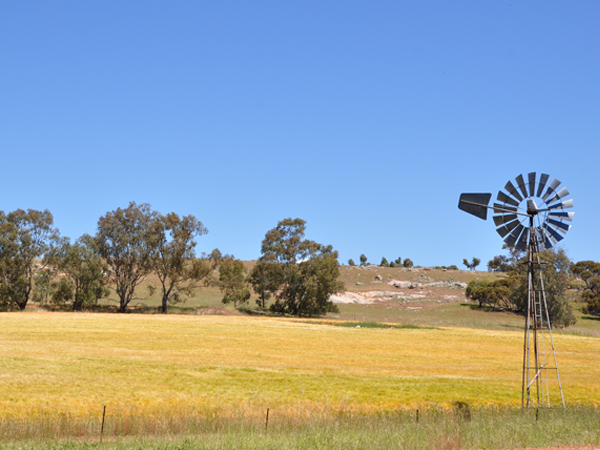
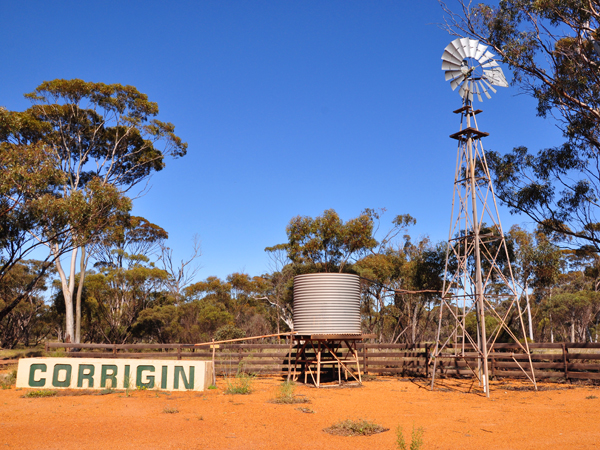
The highway stretched endlessly ahead of us, cutting through Western Australia’s Wheatbelt like someone had drawn a ruler across the landscape. Tiny country towns appeared every now and then, each with a bakery, a pub, and absolutely nobody walking around. Every few kilometres another enormous grain silo rose from the flat countryside like a lonely skyscraper.
“Imagine explaining this back home,” Tom said. “We’re spending an entire day driving to visit… geology.”
“Not geology.”
“Oh?”
“A very famous piece of geology.”
Then when you reach Wave Rock:
At first glance, I had to admit it looked… well… like a very large rock.
Tom folded his arms.
“This?”
“Wait.”
We walked closer.
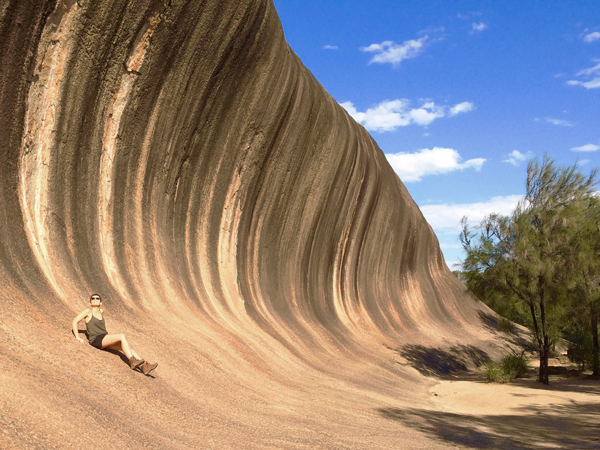
Suddenly the scale changed. The smooth granite curled into a perfect breaking wave, frozen in time, fifteen metres high and over one hundred metres long. The streaks of orange, grey and black looked as if the ocean had crashed here millions of years ago and then simply forgotten to leave.
“Okay, this is pretty impressive” Tom admitted.
“I told you.”
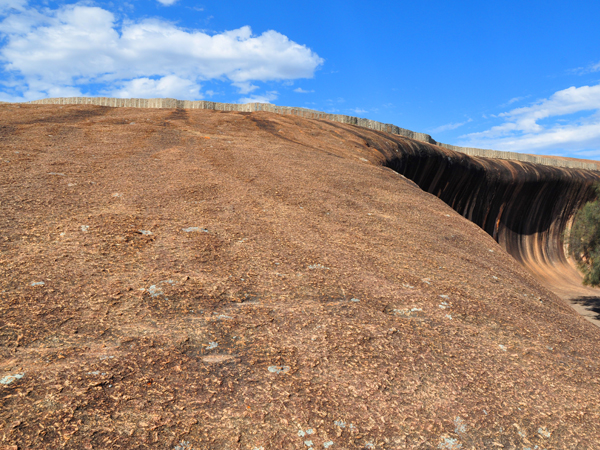
As we stood admiring Wave Rock, someone mentioned another Australian oddity nearby: the Rabbit-Proof Fence on top of the rock.
“Wait,” I said. “They built an actual fence across Australia?”
“Please tell me that’s not literally a fence.”
“It is.”
“A fence.”
“Over three thousand kilometres long.”
Silence.
Finally he shook his head. “Australia really looked at a rabbit problem and thought: let’s build one of the longest fences on Earth.”
I laughed. “When you put it like that…”
As it turned out, this wasn’t some tiny farmer’s fence to keep a few rabbits out of the vegetable patch. This was a serious government project. Faced with an exploding rabbit population that was devouring crops faster than anyone could stop it, somebody had come up with what must have sounded like an excellent idea at the time.
“Let’s build a fence.”
Not just any fence.
One stretching for thousands of kilometres.
I had to admire the optimism. It was such a wonderfully Australian solution. If you’ve got a problem, don’t think small. Build something enormous. If it’s still not enough, make it even longer. There was only one tiny flaw in the master plan. The rabbits weren’t particularly interested in waiting.
Construction took years, while the rabbits reproduced at a pace that would make even the most ambitious project manager weep. By the time long sections of the fence were finally finished, the furry invaders had already slipped through unfinished gaps, wandered around the ends, crossed rivers and generally ignored the government’s expensive attempt to organise nature.
“So… the rabbits won?” I asked.
The guy nodded.
“The rabbits won.”
Millions of dollars, thousands of kilometres of fencing, years of labour… defeated by an animal barely bigger than a loaf of bread.
Standing beside that endless line disappearing towards the horizon, I couldn’t help laughing. Human beings really do have extraordinary confidence in our ability to control nature. Nature, on the other hand, usually responds with a polite smile before carrying on exactly as it pleases. The strangest thing about the Rabbit-Proof Fence wasn’t that it failed. It was that, years later, it became part of one of Australia’s most remarkable true stories.
Originally built to stop millions of introduced rabbits from destroying farmland, the fence stretched across Western Australia like a scar through the landscape. Yet history had given it another meaning. It later became known worldwide through the story of three Aboriginal girls who escaped government settlement and walked more than 1,600 kilometres home by simply following the fence.
Suddenly, what had sounded like another quirky Australian roadside attraction became something entirely different.
It reminded me that some of the wildest places are shaped as much by human ambition and resilience as by nature itself. We had set out to see an extraordinary rock and stumbled upon an extraordinary story instead. One was sculpted by wind and rain over millions of years. The other by courage, determination and an unbreakable connection to home.
Sometimes the wildest discoveries aren’t the ones marked on the map. They’re the stories waiting quietly behind them.