Welcome in wild Australia
Australia did not ease me in.
It did not greet me gently with a soft sunset, a polite kangaroo and a refreshing drink after thirty-five hours of travel. No. Australia welcomed me with a drug-sniffing dog in Perth Airport who took one serious look at my backpack, sat down beside it and barked as if he had just uncovered an international smuggling operation.
For one panicked second, I had no idea what was happening.
Then it hit me.
Chocolate.
My precious Belgian chocolate!
They were hidden in my bag like contraband treasure were the last surviving pieces of Santa Claus chocolate I had brought from home, intended as emotional support during the endless chain of flights from Brussels to London, Singapore, Perth and Darwin. I had crossed half the planet, slept in strange positions on airport seats, lost all sense of time and human dignity, and now Australia was coming for my snacks.
The officer was not smiling.
The dog looked deeply satisfied with his life choices.
I did the only logical thing a tired Belgian woman could do in that moment. I quickly shoved one final piece of chocolate into my mouth before the rest was taken away forever.
And that, officially, was how my first Australian road trip began: slightly guilty, chocolate-free and already under investigation.
By the time we reached Darwin, the heat hit like someone had opened an oven door and invited us to live inside it. November in the Top End is the build-up to the wet season, which sounds innocent enough until you realise the air itself feels like it is waiting to explode. Clouds gathered without releasing rain, thunder muttered somewhere in the distance, and everything seemed to hum with the heavy tension of a storm that had not yet decided whether to arrive or just threaten everyone for dramatic effect.
We walked along the coast, still trying to understand where we had landed, when a jogger casually called out, “Watch out for crocs.”
Just like that.
No panic. No explanation. Just a friendly reminder that in Australia, even a beach walk comes with possible prehistoric consequences.
That was the first proper lesson. Australia is stunning, but she does not believe in false advertising. The beauty is real, but so are the warning signs. Crocodiles, sharks, box jellyfish, venomous spiders, snakes, things that hide in shoes, things that lurk in rivers, things that look harmless until you read the information board and realise they could ruin your afternoon permanently.
Naturally, I was thrilled.
A few days later, we picked up our compact 4×4 camper and pointed it towards the Northern Territory wilderness, full of water, vegetables, bread, pasta and, because I had learned nothing, more chocolate.
We had barely left the main road when something shot across the track in front of us, moving with the urgent confusion of a creature late for a very important meeting.
“What was that?” I shouted.
It looked like a tiny dinosaur with a decorative neck fan and a flair for theatre.
A frill-necked lizard.
Gone in seconds.
Welcome to the Outback, where even the reptiles make dramatic entrances.
From that moment on, every shadow had my attention. A stick might be a snake. A leaf might have legs. A suspicious lump might be nothing, or it might be the start of a story that ends with a local saying, “Yeah, you don’t want to touch that.”
We bumped along rough tracks into Litchfield National Park, the camper rattling over gravel while red earth, eucalypts and blue sky opened around us in all directions. It felt vast in a way Europe rarely does, not just wide but ancient, as if the land had been watching humans arrive with opinions for a very long time.
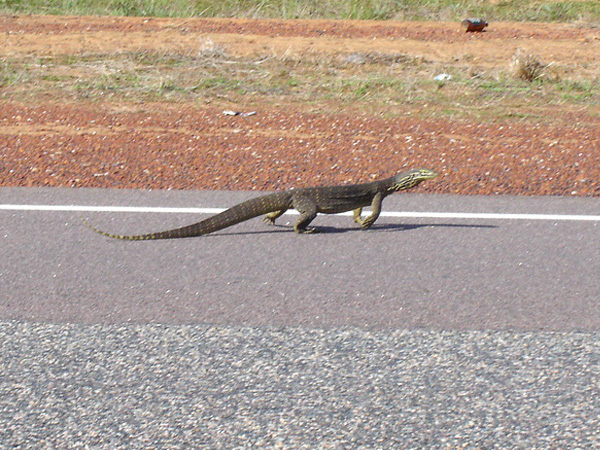
At Wangi Falls, flying foxes hung above us like restless black umbrellas, while a giant monitor lizard slid through the grass with the calm confidence of an animal who knew exactly how impressive he was. At Florence Falls, we floated in cool water beneath glowing rock walls, half in paradise, half wondering what invisible thing had just made that splash nearby.
That evening, we pulled into a tiny campsite where the bathroom came with its own welcoming committee.
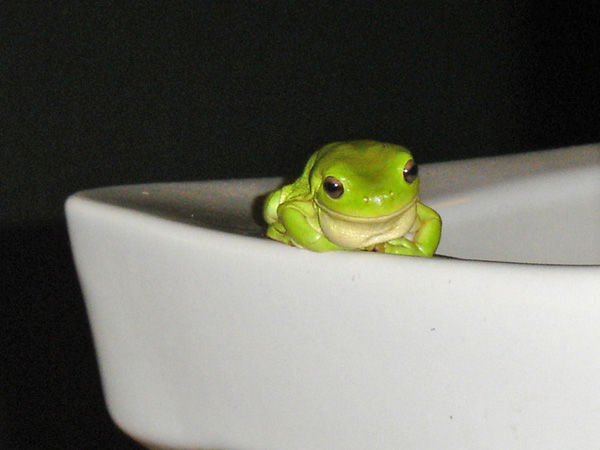
First, a bright yellow frog launched itself at the shower wall like a tiny wet acrobat. Then, on the sink, something was staring at me, sitting perfectly still, shaped exactly like a bar of soap but with eyes.
He stared at me.
I stared back.
It was unclear who had more right to be there.
That night, the bush erupted into sound. Frogs, insects, birds, rustling things, calling things, things with wings, things with opinions. It was not silence but a full-blown wilderness orchestra, and we were sleeping in the cheap seats.
The next day, on the Adelaide River, Australia raised the stakes.
A saltwater crocodile launched itself out of the water beside our boat, jaws wide, body vertical, ancient and terrifying and magnificent. One second there was only muddy river. The next, there was a four-metre reminder that humans are not always at the top of the menu. I stopped breathing for a moment. Not from fear but from awe.
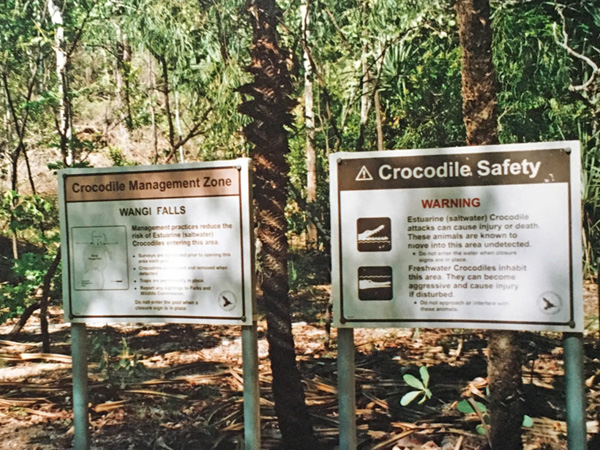
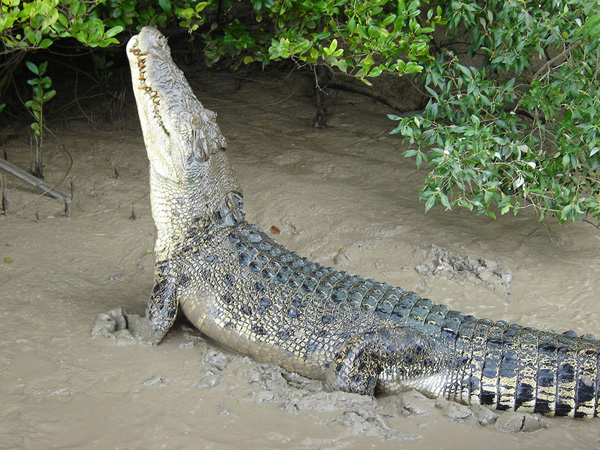
That would become the feeling I carried through Australia: awe with a safety briefing attached because this country did not just show me wild beauty. It taught me that wildness is not decoration. It is not there for our entertainment, our photos or our travel stories, although naturally I took the photos and collected the stories anyway.
Wildness has rules. Keep your hands inside the boat. Do not swim just because the water looks inviting. Check your shoes. Respect the land. Listen when locals warn you. And never assume the frog-shaped soap is actually soap.
By the end of those first days, red dust already clung to our shoes, sweat had become a permanent personality trait, and I had begun to understand why Australia gets under people’s skin. It was not just the landscapes, although they were spectacular. It was the feeling that everything around you was alive, alert and slightly amused by your soft European assumptions.
Australia had taken my chocolate, tested my nerves, introduced me to crocodiles, frogs, lizards and warning signs, and somehow made me fall completely, hopelessly in love. Which, I suppose, is exactly what wild places do best.